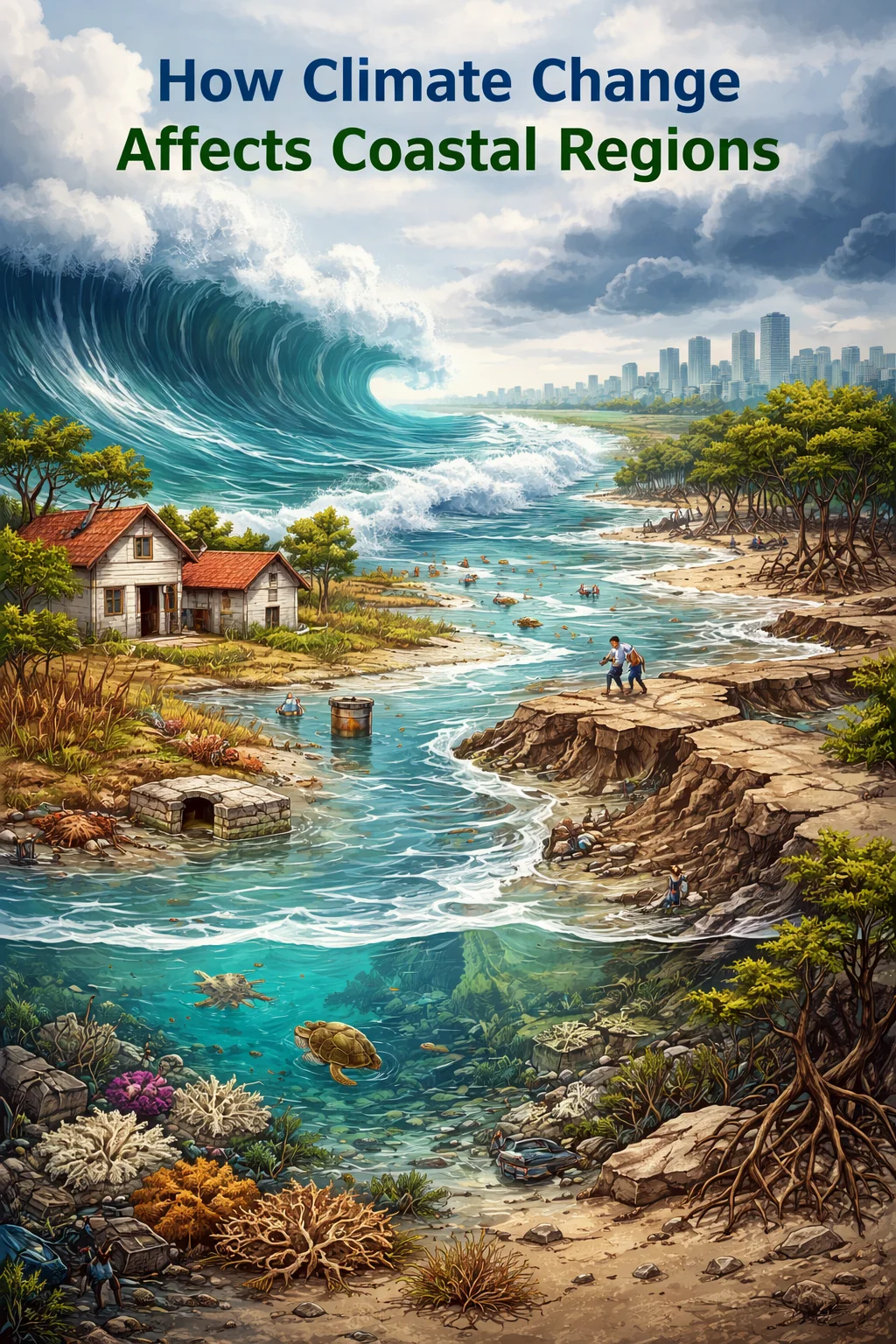
Sea levels are rapidly rising every year, reaching levels that will see land inundated, and damage incurred over time.
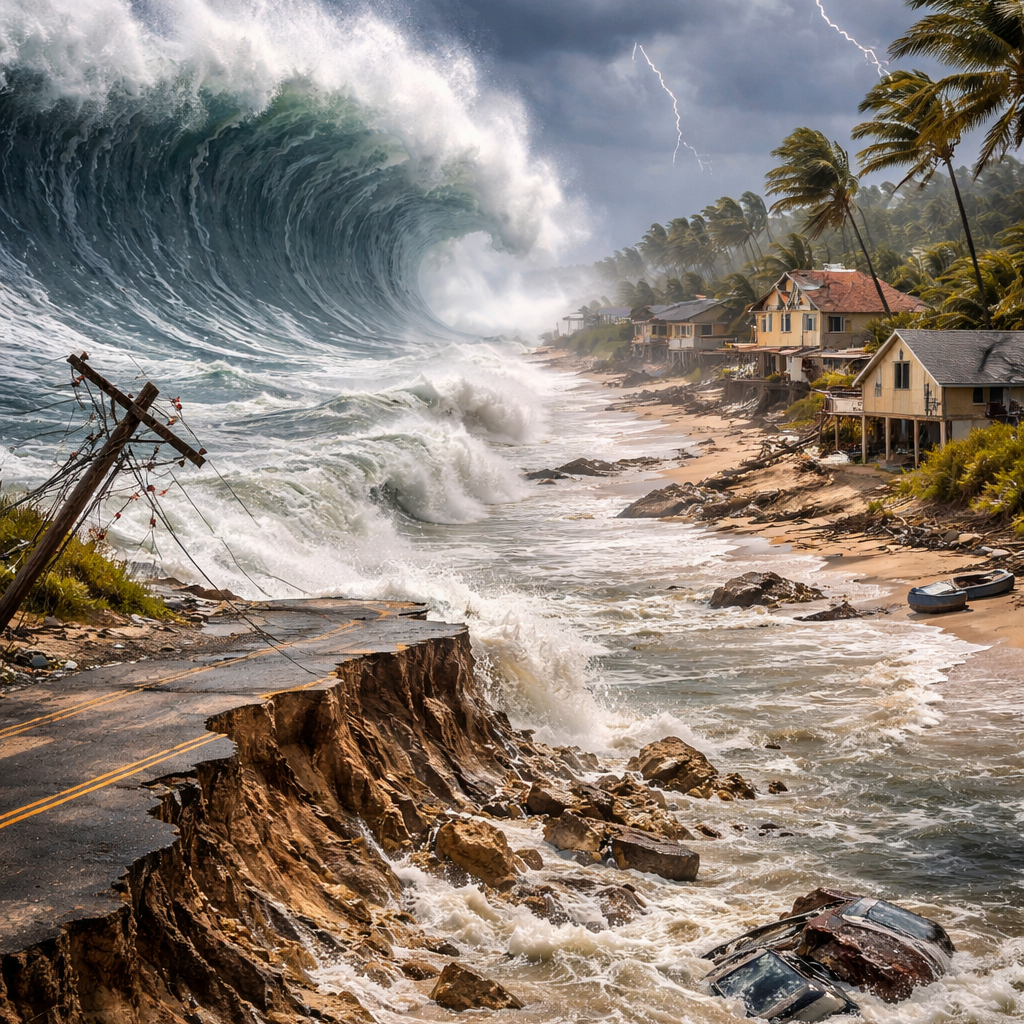
As we witness sea-level rise, we are also observing an increase in storm activity. These storms create more powerful floods than floods caused by climate change in temperature. Storm surges can result in much higher levels of flooding than would be the case if the temperature had remained steady over a period of years.
A second factor driving changes to coastlines over time will be the increased frequency of storms and, therefore, greater damages caused by these storms.
The increase in the number of storms will also continue to add additional stress to our coastal communities. Over time, communities will experience a constant accumulation of damage due to increases in both storm intensity and frequency.
Stronger Storms and Increased Coastal Erosion
Communities that once did not suffer from storm damage may find themselves with little choice but to adapt to new conditions or abandon their community completely.
In addition, the erosion of our coastal areas is already occurring and will likely accelerate over time. The erosion that we are experiencing today will continue to change coastlines at a rapid pace.
When these weather conditions specifically hit land, such as hurricanes, they become fragmented and fall apart before they can proceed to become a storm. The high wind speeds travel across the ground creating a large amount of wind shear, leading to faster moving waves crashing into the shore multiple times with the same amount of force every time they crash. The waves are pushing the water inland, taking everything with them and causing the natural protective barrier that has previously provided protection from waves such as beaches, dunes, and cliffs to erode much faster than prior years.
The shoreline continues to erode slowly and imperceptibly. The boundaries between the land and the ocean no longer exist; at the same time that land is eroding significantly, communities that were once safe from the ocean are becoming exposed to the ocean by standing on developing land subject to significant loss of land area.
Impacts of Marine Life and Ecosystems
The ocean is developing beneath the surface of the ocean; the changes are much more subtle than visible above the surface but they are very important. Ocean temperature and ocean carbon dioxide levels are continuing to increase faster than thought to be possible which is changing the way the ocean functions and is impacting every level of life. The ocean itself is becoming less and less healthy for many species of marine life.
Coral reefs are the most visible way that the oceans are suffering due to the increased temperature of the ocean and the damage to the reef itself is happening even when the ocean temperature increases slightly due to the bleaching process of coral reef. Mangrove forests and seagrasses are very much being impacted by the increasing ocean temperature and continue to serve as breeding grounds for marine life.
As these ecosystems deteriorate, the impacts radiate outward from these systems. Fish stocks decline. The relationship between predators and prey changes. The food web becomes less stable. Biodiversity decreases, as does the ability of the ocean to recover from stress. This has immediate and deeply personal impacts for coastal communities that rely on these resources.
Economic and Social Consequences To Coastal Communities
The impact of climate change on coastal communities goes beyond the environment; it significantly affects the way that people live day in and day out. Local economies of coastal communities have traditionally been based on fishing and tourism and, more recently, agriculture; as conditions become unpredictable, the economies of these communities are showing signs of distress. One poor fishing season leads to several more poor fishing seasons. Income from fishing becomes increasingly less reliable and sources of income in coastal areas are becoming less stable.
The damage to infrastructure happens everyday; roads crack and shift, buildings begin to weaken, and the systems put in place to protect us from these damages are failing. To repair and reinforce these systems costs immense amounts of resources – something that many communities cannot afford to keep up with. Therefore, the financial burden of maintaining these systems just continues to grow year after year.
At a certain point, for a number of people, it becomes impossible to continue living where they currently reside. Families have to leave behind not only their homes but also the histories, cultures and connections attached to those homes. When social systems become disrupted, inequalities are dramatically widened and those least able to withstand this displacement carry the largest burden.
In the end, the impact on people’s lives should be beyond the physical changing of coastlines; it is truly about the loss of livelihoods, the uprooting of whole communities, and a future that seems like it will be increasingly uncertain with the rise of the sea.
Saltwater Intrusion and Freshwater Shortages
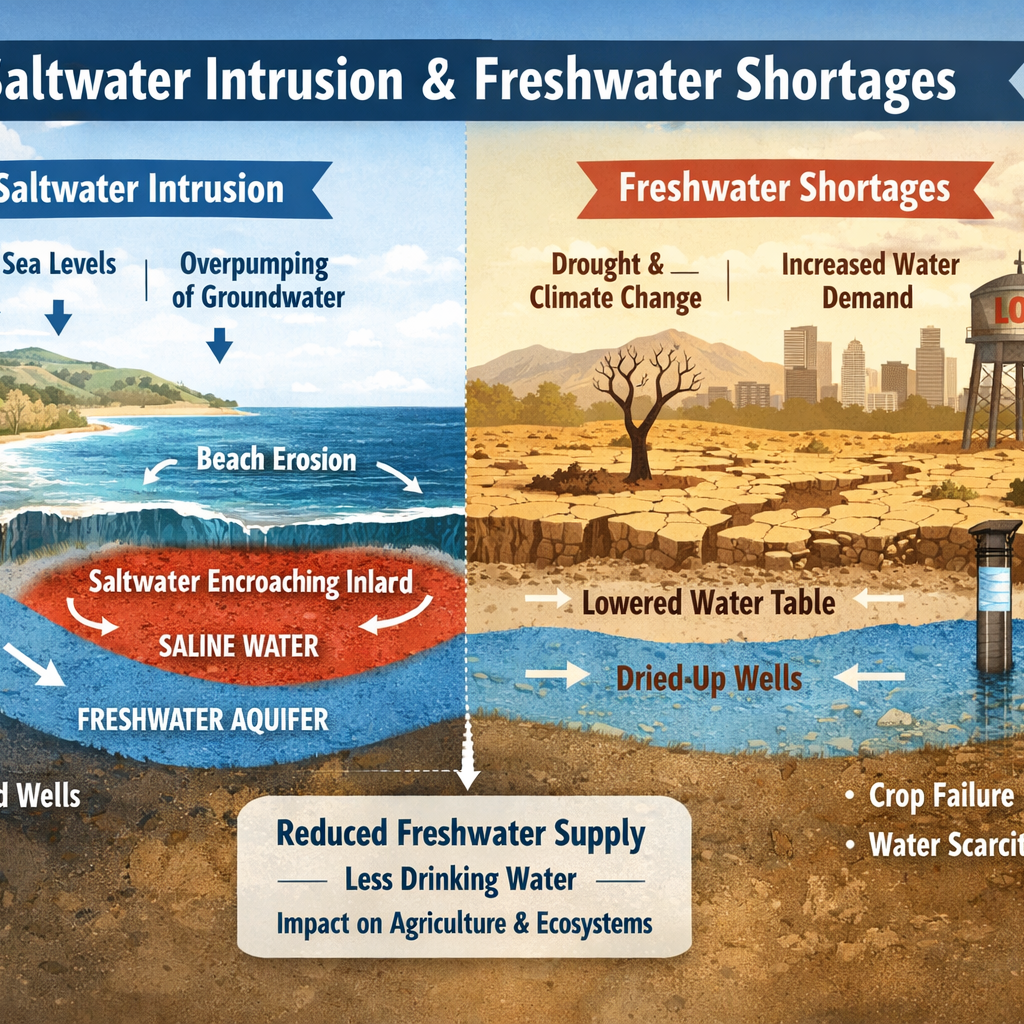
As the oceans get higher, salt water comes up through the land and slowly mixes with the fresh water inside of the rivers, the aquifer and within the ground. This salt water intrusion makes the drinking water contaminated and the water used for agricultural purposes becomes unusable. The agricultural crops suffer and the quality of the soil declines. Communities which had had the ability to access nearby sources of fresh water experience declines in this fresh water making it very scarce.
At first, the problem is very hard to detect; however, over time it becomes progressively larger. Wells become brackish, and the irrigation systems are not able to function properly. The access to reliable fresh clean water in many of the coastal areas is of increasing concern forcing the population to look for other methods (that are often very costly) to obtain the water.
Loss of Coastal Habitats / Biodiversity
Coastal ecosystems are fragile environments, whereas climate change is making the coastlines go beyond their limits. Because of the rise of the sea level, changes in temperature, and increased human stress, coastal ecosystems (including wetlands, mangrove forests, coral reef, estuaries, etc.) are rapidly being impacted by the rising seas as well as changes to the environment. Some are being lost to submersion and others are slowly dying.
Habitats serve as not only the physical aspects of the landscape but also as valuable resources for numerous types of living things. As these habitats are vanishing, we are seeing a decline in the number of species living in them, which results in the loss of breeding areas, food sources, and places to live. Because of the inherent interdependence of living things, when you lose habitat, you have fewer types of living things to depend on each other and the ecosystems that support them become weaker. Once it is lost, restoration of that area will be quite difficult, if not impossible, to achieve.
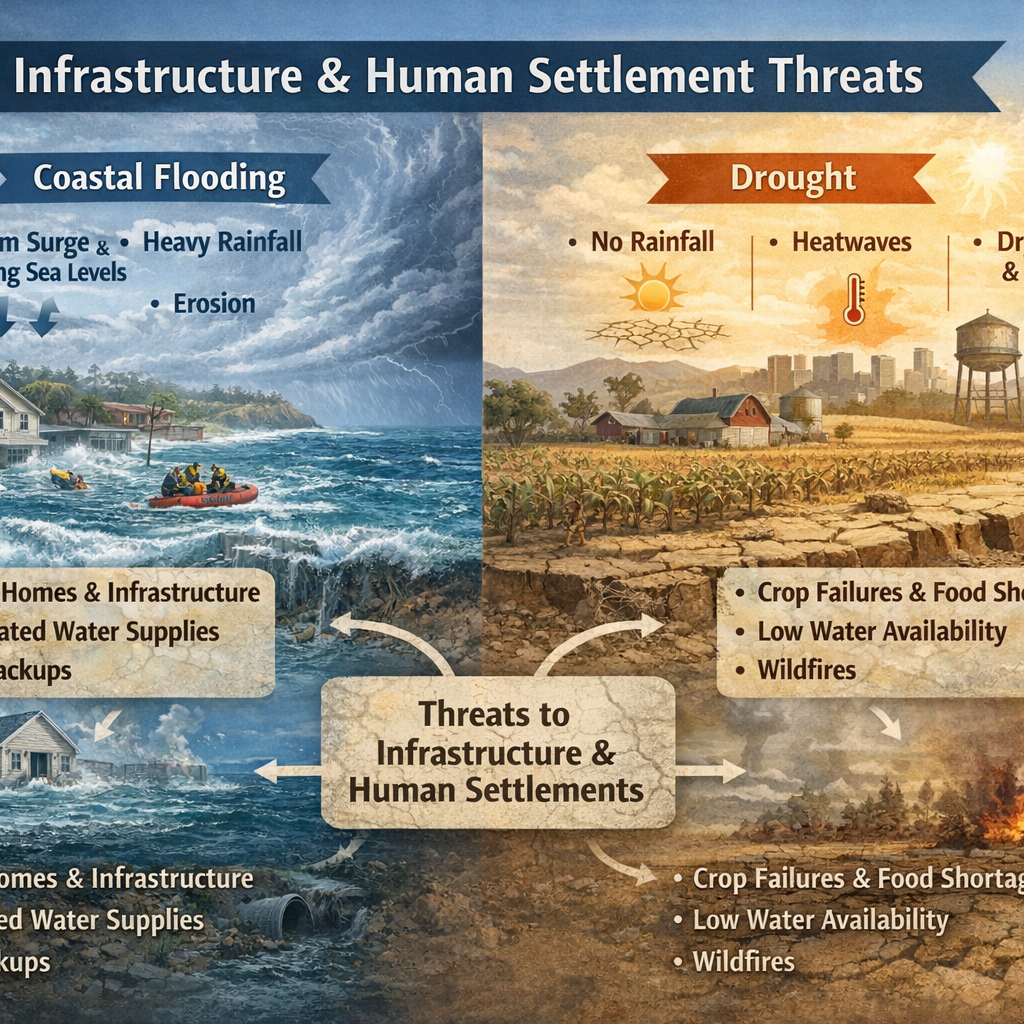
Infrastructure and Human Settlement Threats
Coastal infrastructure continually faces challenges due to climate change. With rising sea levels, increased flooding, and more frequent and intense storms, buildings, roads, highway systems, marine ports, and energy delivery systems have been exposed to increasing stress and thus deteriorating more rapidly than they were originally designed to do; things that were designed to last many decades are now falling well short of their anticipated service life due to repeated extremes.
As a result of the climate-related threats above, entire communities are at increased risk. Houses are being damaged or destroyed, transportation systems are being disrupted, and community services are becoming increasingly unreliable. Moreover, maintaining and repairing infrastructure is becoming more expensive each year, further straining both governments and communities. In some instances, simply moving the infrastructure to a more secure location will be required.
Adaptation and Mitigation Strategies
To address climate change effectively, immediate, and long-term strategies will be needed for adaptation and mitigation. Adaptation entails developing ways to adapt to the changes occurring due to climate change. For example, building sea walls or restoring mangroves, creating more efficient drainage systems or developing infrastructure that can withstand climate impacts all represent mitigation or adaptive measures to mitigate the damage that occurs from sea level rise or other types of climate change which put vulnerable areas at risk.
Mitigation does not focus on adaptation; rather it focuses on the root of the climate change issue bringing about climate change by reducing greenhouse gas (GHG) emissions, converting to renewable energies, and implementing sustainable practices will reduce climate change progression.
When adaptation and mitigation strategies are used together, they create a double approach, providing protection to coastal areas now while preparing for their future in an unpredictable environment that is rapidly changing.
Conclusion
The development of climate change will continue to reshape the coastal area and could be clearly seen in the future of disrupting events. Rising sea levels, severe weather events, ecological systems dying or disappearing and shortages of clean and safe water have all risen to threaten the coastal areas. All these factors have caused the coastal areas to change, there is less land available for those who want to farm or fish and there are less natural barriers between the land and the ocean.
The effect on communities and economies has already had a huge impact on the people living in coastal areas and these same individuals rely upon these areas for their survival. The impacts of climate change have been felt; however, it is these people who generally have the least ability to adapt to the changes resulting from climate change.
While there is some hope that with immediate action, including reducing greenhouse gas emissions, developing resilience-oriented infrastructure and preserving essential ecosystems, there is still an opportunity to mitigate the damage that is occurring to coastal areas and help ensure a viable future. An urgent, innovative and cooperative approach to how we care for and sustain coastal areas is important. Protecting coastal areas is ultimately protecting lives, cultures and what remains of our existence on this planet.