
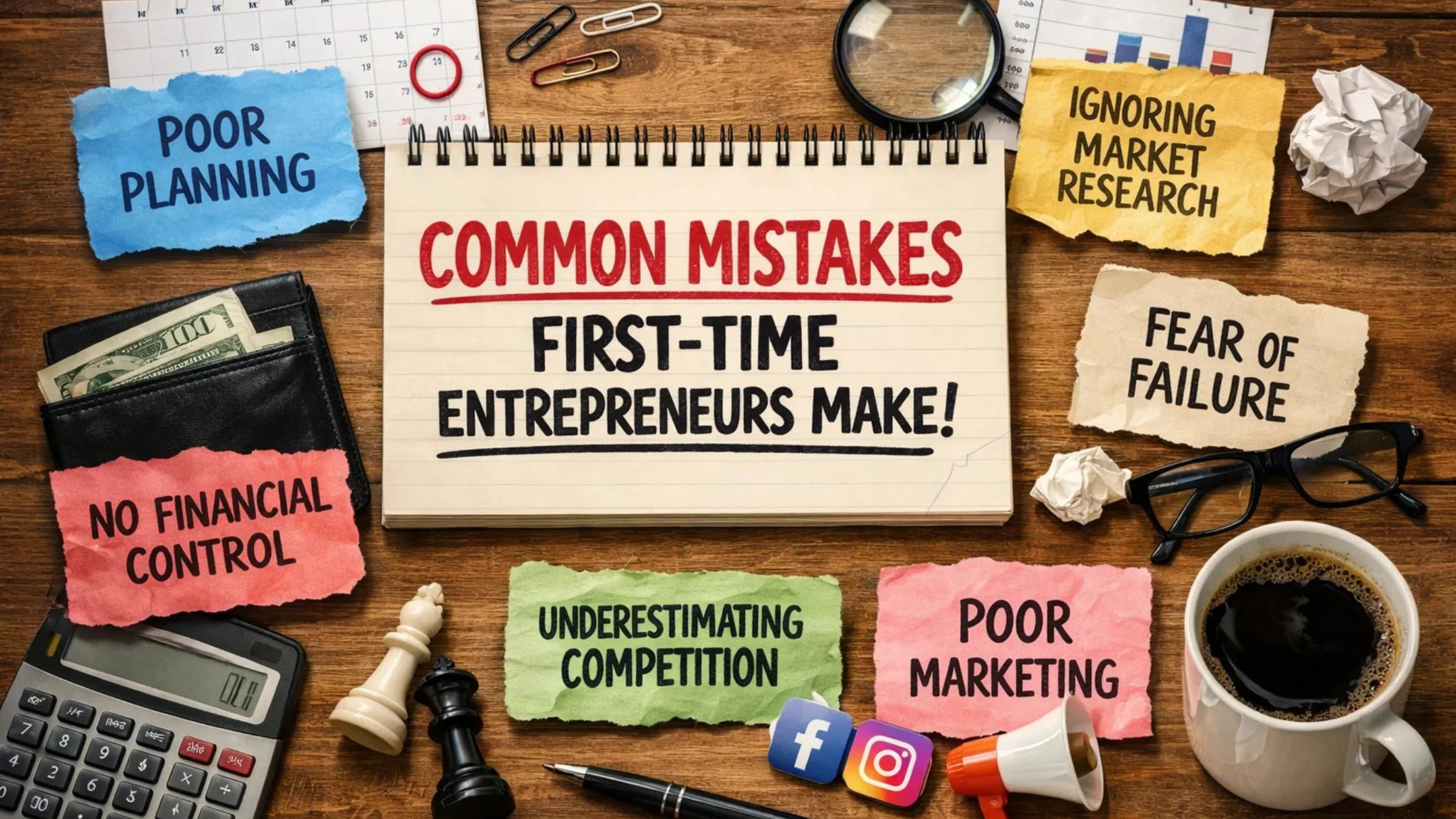
Common Mistakes First-Time Entrepreneurs Make (and How to Avoid Them) 2024
Starting a business for the very first time feels electric. There’s a rush to it—an almost addictive blend of ambition, freedom, and possibility. You’re not just earning anymore; you’re building, shaping, creating something that could outlive you. And yet, beneath that excitement lies a quieter truth: the road from idea to sustainability is rarely straight. It twists. It stalls. Sometimes, it breaks entirely.
Most first-time entrepreneurs don’t fail because they lack passion. They fail because they fall—often unknowingly—into patterns that could have been avoided.
Let’s unravel a few of those patterns.
1. Skipping Proper Market Research
It usually begins with a spark. An idea that feels brilliant, obvious even. You think, “If I want this, surely others do too.” That belief is comforting. It’s also dangerous.
Too many new entrepreneurs leap straight into building—products, websites, brands—without stopping to ask a fundamental question: Does anyone actually need this?
Passion can ignite a business, yes. But it cannot sustain one on its own.
Real market research isn’t glamorous. It’s slow. Sometimes frustrating. But it reveals what instinct alone cannot:
- Who your audience actually is (not who you imagine them to be)
- The problems that genuinely bother them
- The imperfect solutions they’re already using
- The competitors quietly dominating the space
Skip this step, and you’re not launching a business—you’re gambling.
Take the time. Ask questions. Listen more than you speak. Because clarity at the beginning saves collapse later.
2. Underestimating Startup Costs
Money. It’s often treated as a rough estimate—something you’ll “figure out along the way.” That mindset? It’s one of the fastest routes to failure.
Many first-time founders calculate only the obvious: setup costs, maybe some inventory, a bit of branding. What they overlook are the silent, ongoing drains—marketing campaigns that don’t convert immediately, operational hiccups, maintenance costs, unexpected fees.
The result is predictable. Cash runs dry. Momentum stalls. Stress builds.
A smarter approach is less optimistic—and far more effective:
- Map out every possible expense, not just the visible ones
- Separate fixed costs from variable ones
- Build a financial cushion (then add more to it)
- Assume income will arrive later than you hope
Because it usually does.
Running out of money doesn’t always mean your idea was bad. Sometimes, it simply means your timeline was unrealistic.
3. Trying to Do Everything Alone
In the beginning, doing everything yourself feels almost heroic. You’re the strategist, the marketer, the accountant, the customer support agent—all in one. It’s impressive. For a while.
Then it becomes exhausting.
Here’s the problem: being a jack-of-all-trades often means being a master of none. You might be brilliant at product creation but completely lost when it comes to sales. Or perhaps you understand branding but struggle with numbers.
Ignoring those gaps doesn’t make them disappear. It amplifies them.
The most effective entrepreneurs understand a simple truth: growth requires letting go.
That might mean:
- Delegating repetitive or time-consuming tasks
- Outsourcing specialized work to people who know it better than you ever could
- Seeking guidance from mentors who’ve already made—and survived—the mistakes
- Building a small, focused team that complements your weaknesses
Doing everything alone isn’t strength. It’s a bottleneck.
And sooner or later, it will slow you down.
Starting a business is not about avoiding mistakes entirely—that’s impossible. It’s about recognizing them early, adjusting quickly, and moving forward with sharper awareness.
Because success rarely comes from getting everything right the first time.
It comes from learning fast… and refusing to quit.
4. Focusing Too Much on the Product
Many new entrepreneurs get so caught up trying to create a “perfect” product that they end up spending months creating features, design, etc., before they ever launch the product.
Issues:
1. Customers don’t care about how “perfect” your product is; they care about how it can provide them value.
2. Instead of focusing on creating a “perfect” product, you should:
Launch an MVP (minimum viable product).
Obtain customer feedback as early as possible from real users.
Change your product based on customer feedback, not based on the features you thought you should have built.
Your product should develop and grow along with your customers—not in a vacuum.
5. Ignoring Customer Feedback
Even once the new entrepreneur launches their product, some fail to receive or listen to customer feedback and instead try to hold onto their original intent and vision.
This will hurt your business. Your customers are the most important part of your business and their feedback is the most important part of growing your business.
Examples of how to collect and use customer feedback:
- Reviews and complaints.
- Conversations from customer service.
- Usage patterns.
- Feature suggestions.
Businesses that are receptive to customer feedback and can continually adapt will have a much higher chance of success.
6. Weak Marketing Strategy
A successful business has a reliable marketing strategy to gain exposure for your product, while many first-time entrepreneurs over estimate how easy it is to get customers and that their product will be found naturally once created. However, a marketing plan requires planning, consistency and hard work.
Typical mistakes in marketing are:
- Not knowing your target audience
- Too many platforms with no focus
- Not using consistent branding
- Not having a content strategy
To improve your marketing strategy you should use:
- The appropriate marketing channels for your target audience.
- Consistent, value-based content.
- Tracking and adjusting performance.
7. Lack of Clear Goals and Vision
Without a clear vision and goals, a business can waste time and energy trying to convert an idea into a monetary return. Many entrepreneurs will concentrate on short-term survival and not think about long-term growth.
Having a clear vision gives you, as an entrepreneur, the purpose to make decisions and remain motivated in tough times.
You could consider setting:
- Monthly/weekly goals
- Long term 1-5 year goals
- Measurable milestones
When you have a clear goal, it helps keep you focused on your task.
8. Poor Time Management
Time’s one of the biggest resources any entrepreneur has. With poor time management, even skilled people will struggle with being productive.
Some examples of time mistakes are:
- Putting many hours into low-value tasks
- Changing your priorities too often
- Being a procrastinator
- Not having structure or routine
How to fix these:
- Focus on doing your high-value activities first
- Create a productivity system (such as using a calendar) to schedule your week out
- Create deadlines for yourself
- Minimise distractions that could occur
Although it’s important to work hard, it’s more important to work smart.
9. Fear of Failure
Fear can be one of the biggest roadblocks to new entrepreneurs and can cause you to delay or not start, launch or make bold decisions in your business.
Some people delay their businesses indefinitely because they want to have everything done perfectly before they get it going. Some people won’t take the risks necessary to grow their businesses.
The truth is that every entrepreneur goes through part of their entrepreneurial journey by failing!
Therefore, don’t fear failure; instead,
- Look at it as an opportunity to learn from the experiences
- Take risks but calculate them before implementing them
- Focus on your progress instead of perfection
Everyone that’s been successful as an entrepreneur has failed at one point or another. What you should be looking at is how you handled your failure.
10. Not Adapting to Change
The business environment is a constantly improving environment with the change in customers’ preferences, advances in technology and the emergence of new competitors.
If you don’t adapt to the changes and be flexible, you will usually fall behind.
Be flexible with:
- New ideas
- Watching your industry
- Being able to change course if necessary
11.Neglecting Branding
Branding is about so much more than just a logo or color, it’s how customers will view your business. Many new entrepreneurs may overlook how important it is to create a strong and consistent brand. A weak brand will render your business virtually forgettable even if you have a great product. Some of the elements that comprise a strong brand include: A consistent message and identity, Consistent Visuals and A consistent Tone, and An Emotional Connection with Customers.
Your brand is how you differentiate yourself from everyone else in a crowded market.
Scaling Too Quickly
Even though growth is great, if you scale too quickly, you run the risk of negative consequences. Some entrepreneurs have scaled their companies before they were ready, causing operational issues and putting financial stress on their businesses.
Some examples of early-stage scaling include:
- Hiring too many employees before your company is stable
- Going into new markets before you have gone through proper due diligence and planning
- Increasing operating costs before you have consistent revenue
Sustainable growth is much better than unstable, fast expansion.
12. Scaling Too Quickly
Many new entrepreneurs focus only on the creative and operational parts of running their companies and completely disregard the legal aspects that they must follow. Disregarding these tasks could cause severe problems down the road.
Some things that need to be taken into consideration are:
- Registering your business
- Obtaining all the required licenses and permits
- Drafting all contracts and agreements
- Paying taxes and complying with all regulations
If you handle these things correctly from the beginning, you will be setting your business up for success in the long run.
13. Comparing Yourself to Others
Many people compare themselves to others through social media. Seeing people succeed quickly can lead to pressure and not believing in yourself.
Every business has its own path and will take time to develop. Success will almost never happen overnight.
Focus on:
- Where you have improved
- What makes you unique
- Getting better every day
Comparing yourself to others will keep you from focusing on the important things.
conclusion
starting a new business can be both a challenge and worth it at the end. All businesses will make mistakes, and you can avoid them with the right mindset, being prepared, and being aware of your surroundings.
Some of the common mistakes are not doing market research, not having the finances to support the business, not having the right way to promote or market your product, and being afraid to fail. All of these mistakes can prevent a person from succeeding. The good news is that every mistake is an opportunity to learn and to have personal growth.
Even though entrepreneurs have experienced failure, they do not allow that to deter them from being successful in their business ventures. The most successful entrepreneurs understand they will fail, but learn quickly, adjust very well, and continue to persevere when times are difficult. They realize perfection is not as important as making progress and every one of those movements—whether it’s forward or backward—has an impact on their overall experience.
If you are just beginning your entrepreneurial journey, remember this:
You do not need to figure out everything before you start taking action; you just need to be willing to take action and learn along the way (i.e., continuous improvement).
There is no such thing as a straight line when transitioning into being an entrepreneur; entrepreneurship involves learning from failures and overcoming adversity. You should appreciate every step along the way, exhibit great resilience, and continue to take steps forward. Your success in the future is based on the way you react to mistakes rather than preventing mistakes from occurring.


I really like the emphasis on truly listening to your audience instead of assuming what they need. It’s easy for first-time entrepreneurs to get excited about their idea and skip this crucial step, but understanding real pain points can make all the difference in building something sustainable.
This resonates deeply—especially the point about skipping market research. I’ve seen too many passionate ideas fall flat because the founder assumed demand existed when it didn’t. Taking the time to truly understand your audience and their pain points early on can save months of wasted effort and heartbreak. Thanks for calling that out so clearly.