
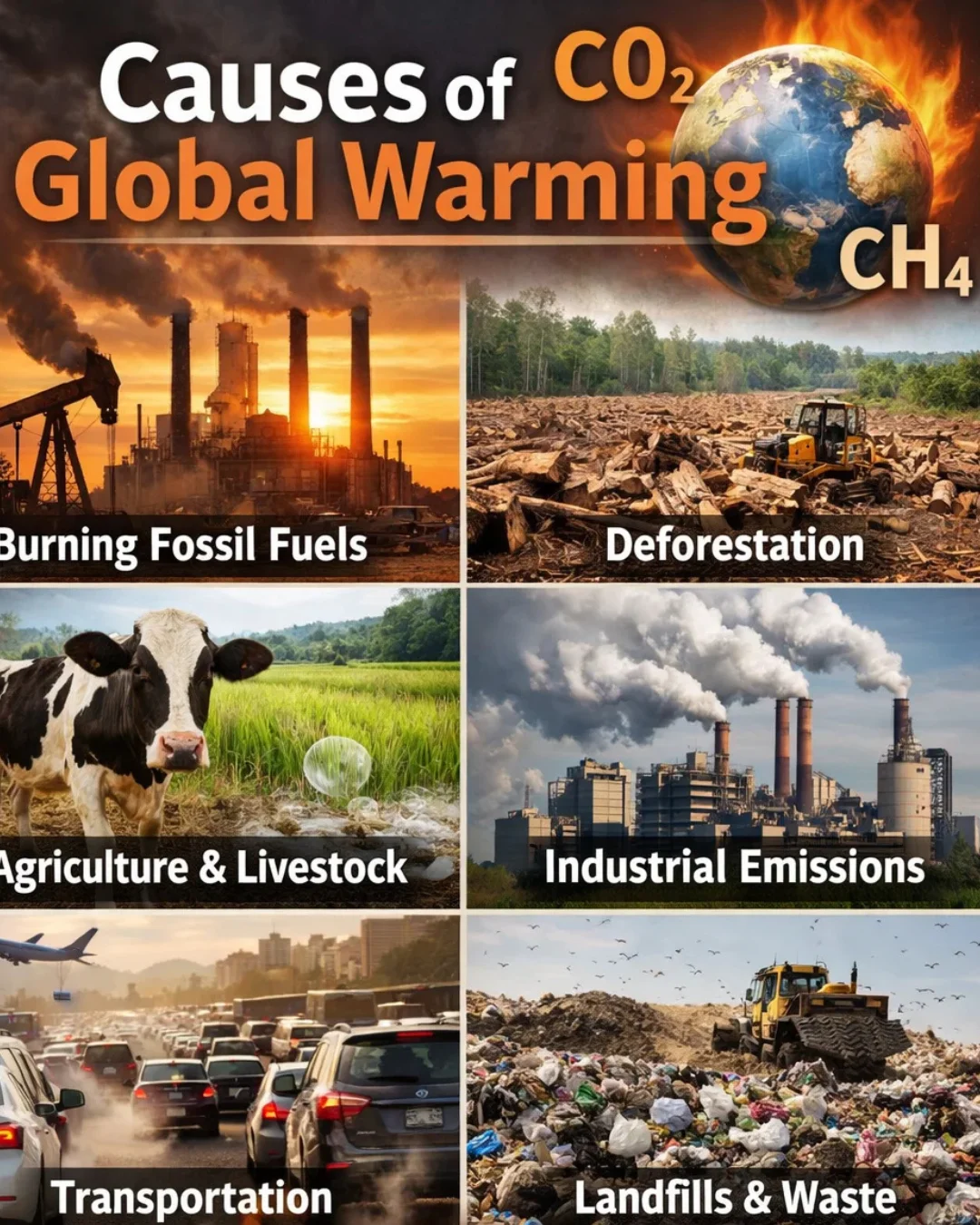
Global climate change has emerged as one of the most pressing environmental concerns that we face collectively today. Scientists from various countries provide information regarding changes in weather patterns globally, as well as in ecosystems and the impact on human beings due to increased temperatures on earth. So what causes the earth’s temperature to rise? Understanding what is contributing to global warming is essential if we are to address this problem on a global scale.
What Is Global Warming?
Global warming is defined as the long term increase in earth’s average temperature. The average increase in temperature occurs primarily because of greenhouse gases that are present in the atmosphere holding in solar radiation, which leads to the warming of the earth surface and the maintenance of conditions for life. Natural and anthropogenic activities have resulted in the addition of an excessive amount of these greenhouse gases into the atmosphere causing the earth to be warmer than normal.
1. Burning Fossil Fuels
One contributor to the problem of global warming due to anthropogenic climate change is the burning of fossil fuels (coal/oil/natural gas). These forms of fossil fuels are used for producing electrical power, operating vehicles and running industries. The combustion of fossil fuels results in the release of large amounts of carbon dioxide (CO2), a greenhouse gas that will hold heat within the atmosphere.
Global population growth and increasing need for energy to meet that demand will also continue to lead to increased burning of fossil fuels with corresponding increase in greenhouse gas emissions from the burning of fossil fuels. Current transportation methods (e.g., factory use of power plant-generated electricity, automobile use of gasoline) are all contributing to this problem.
2. Deforestation
Forests are very important to our planet’s climate because they help keep our atmosphere balanced. Trees take up carbon dioxide from the atmosphere and give off the oxygen we breathe, which is crucial to maintaining a balanced atmosphere. Unfortunately, millions of acres of forest are removed every year to make room for new agriculture, urban development, and timber harvest.
When trees are cleared, not only has the tree’s ability to absorb carbon been lost, but also the carbon stored in the tree is returned to the atmosphere. This adds to the problem of global warming and disrupts the natural balance of ecosystems.
3. Agriculture and Livestock
Agriculture is another significant contributor to the problem of global warming. The methane gas produced by the digestion of ruminant animals (e.g., cows, sheep) is a greenhouse gas that is much more efficient than carbon dioxide at trapping heat. Large-scale agriculture also contributes to deforestation and degradation of soil quality.
In addition, fertilizer application in agriculture releases the greenhouse gas nitrogen oxide to the atmosphere, which is a greenhouse gas that also contributes to the increase in temperature of the planet.
4. Industrial Activities
Industry has been a key driver of economic development worldwide, albeit, at the same time, many industrial operations produce ample greenhouse gases.
Manufacturing plants create greenhouse gas emissions as a result of the manufacture of products such as cement, steel, chemicals, and plastic. Cement manufacturing represents a significant source of the world’s emissions of carbon dioxide.
Additionally, there are large energy inputs in industry with the majority generated through fossil fuels; so manufacturing contributes to both direct and indirect greenhouse gas emissions.
The growth of industries in developing countries has led to increases in global production and energy consumption. Industrial growth provides an increase in disposable income and creates new jobs; however, it may also create an increase in environmental degradation.
Cleaner technologies, energy efficiency measures, and significant shifts to renewable energy sources will be required for reducing industrial emissions.
5. Transportation
Transportation is one of the most rapidly growing sources of greenhouse gas emissions. Transportation as it exists today generally relies on fossil fuels to transport people and products around cities, countries, and between continents.
Cars and motorbikes are a major source of emissions in urban centres. Long haul trucks are also major consumers of diesel fuel while hauling goods.
Global warming is greatly affected by air travel because planes use jet fuel at high altitudes, which creates greenhouse gases and contributes to climate change.
Ships used for trade on an international level also burn heavy fuel oil, creating greenhouse gases and polluting our air.
As cities develop and grow, so do cars on the road. If no improvements are made in fuel efficiency and use of alternative transportation, then greenhouse gas emissions will continue to increase.
6. Waste and Landfills
Waste management is a further cause of global warming. When organic waste (food scraps & paper) decomposes in landfills, methane gas is created.
Most landfills do not have systems to capture and use methane, allowing the gas to enter directly into the atmosphere.
Growing populations and the increasing use of goods result in an increase in the amount of waste produced by people. Single use items, packaging materials, and food waste are all factors contributing to the amount of waste being produced.
By increasing recycling, composting of organic waste, and reducing consumption we can help to reduce the greenhouse gases generated by waste management.
7. Population Increase and Urbanization
The steady increase in Earth’s population will contribute indirectly, but significantly to the increasing amounts of greenhouse gases emitted into the atmosphere. The greenhouse gas effect will be increased as there will be additional energy sources needed to supply the needs for energy, food, housing and transportation as the population increases.
Urbanization will create additional urban areas, frequently at the expense of trees being removed from the earth (forests), and by adding new infrastructure (roads, buildings), and as an additional drain on our use of fossil fuels for energy.
Urban areas have high energy needs for electricity, water and transportation systems. The electricity and transportation used in urban areas involves using increasing amounts of fossil fuels from the earth, continuing to increase the greenhouse gases emitted into the atmosphere and causing the greenhouse effect to continue.
By planning for sustainable urban growth, by using sustainable development principles, and by implementing and utilizing green or renewable technologies, it is possible to decrease the environmental damage associated with expanding geographical areas of urbanization.
8. Overconsumption and Lifestyles
One of the key factors contributing to many modern lifestyles is that they involve consuming an increasing number of products and services that are energy intensive. Examples are household air conditioning, transportation via cars, cell phones and computers, and fast fashion all of which are energy intensive and require significant energy use to manufacture and transport the products, and add to the total emissions of greenhouse gases.
The food that people consume will also add to total greenhouse gas emissions. Diets that are made up mostly of meat and dairy products will consume many more of the earth’s resources (land, water, energy) than diets based mostly on plant products.
Changing lifestyles towards sustainable development and creating responsible consumption behaviours will significantly reduce the greenhouse gases emitted into the atmosphere.
Why Understanding the Causes Matters
Global warming is a result of multiple causes, which are essential to understanding as it will help society find solutions to tackling global warming. By learning which specific actions produce the greatest amount of greenhouse gas emissions, we can put plans in place to reduce those emissions.
There are already many solutions to global warming. For example, renewable energy sources (solar power, wind power, and hydropower) can provide energy for all needs and are not as damaging to our environment as fossil fuels. By planting trees and restoring degraded land, we can create more carbon sinks that would pull carbon out of our atmosphere. By making improvements in the efficiency of energy within buildings, on the road, and within industries, we also can decrease the amount of greenhouse gas emissions we create.
Education and public awareness are critical to addressing global warming. When people are educated on how their actions impact the environment, individuals will be more likely to adopt sustainable practices.
Conclusion
The issue of global warming is a complicated and multifaceted issue that has many contributing factors. Most of the factors contributing to this issue have originated from human activity. Human involvement can be seen in many different activities including fossil fuel combustion, deforestation, inefficient farming methods, manufacturing, transportation, waste disposal, and population growth which have all contributed to the accumulation of greenhouse gases in our atmosphere.
The accumulation of greenhouse gases in our atmosphere causes heat to become trapped and results in an increase in the temperature of the planet, which has the potential to cause profound changes to the environmental and social fabric of the Earth.
The global warming issue is significant, but there are numerous reasons to be hopeful. Humanity can slow the progression of global warming, as well as create a healthier planet for future generations, through transitioning to clean and efficient forms of energy, improving management of waste, and making sustainable life choices, as well as through build and protecting natural ecosystems.
The first step in being part of the solution to this problem is understanding what has caused the problem. Once humanity is aware of the way it behaves has affected the climate system, we will then be able to join together and build a future of sustainability and resiliency for our shared planet, and ourselves.


Thanks for breaking down the link between fossil fuel use and global warming—it’s easy to overlook how our daily energy choices contribute to rising CO2 levels. It’s encouraging to see the focus on understanding these causes, as awareness is the first step toward meaningful change. The article does a great job of connecting population growth and energy demand to the climate crisis, which really highlights the urgency of shifting toward sustainable practices.
Your point about the connection between population growth and energy demand is a crucial piece of the puzzle, as it shifts the conversation from individual habits to the need for structural industrial changes. It’s a sobering reminder that we must address how we scale power generation to meet those needs if we hope to successfully curb carbon emissions long-term.